What is a spacer?
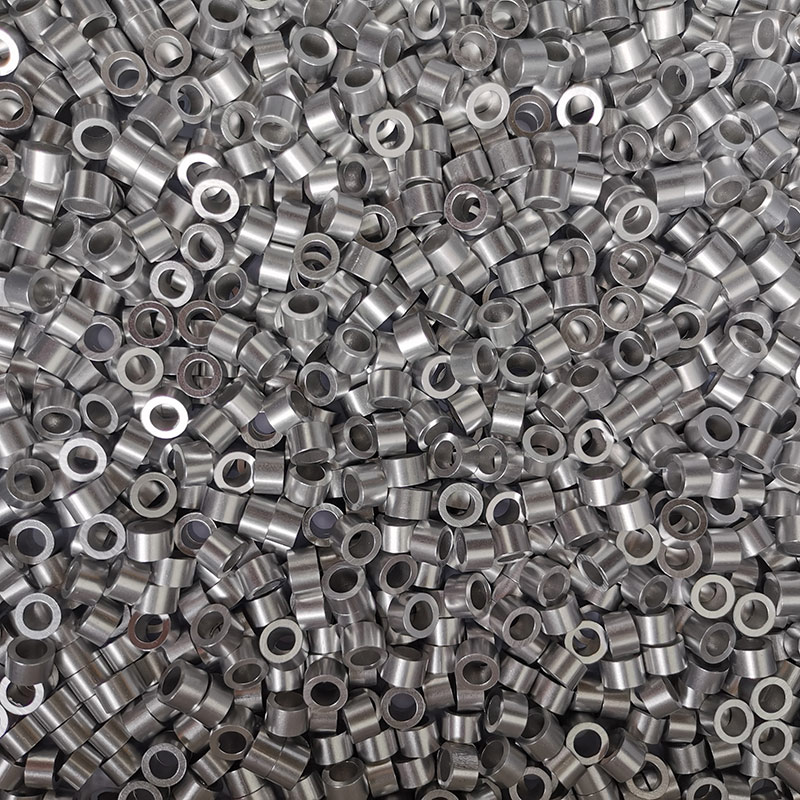
A spacer is used to keep two elements at a set distance from each other, in a fixed manner: a circuit board above a chassis, a cover clear of a motor, two plates of a mechanical assembly. It slides over the screw, or screws in itself, and guarantees a precise, repeatable gap. You will find spacers in electronics, electrical engineering, mechatronics, mechanics, agriculture and machinery, on bicycles, motorbikes and scooters, in furniture and in construction.
Our spacer models
The catalogue is organised into five types, shown on the selector cards on the home page:
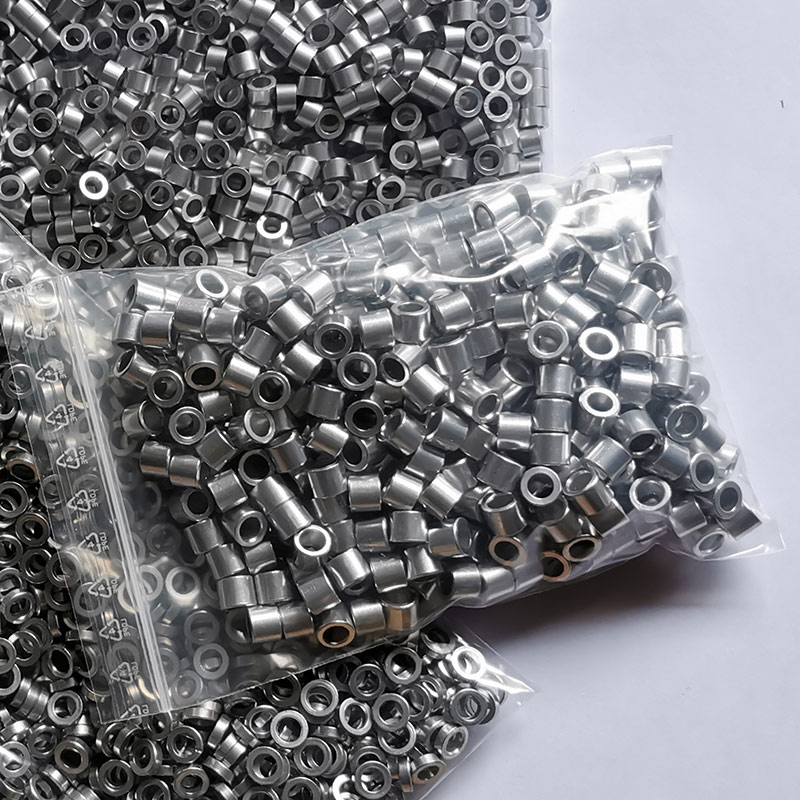
- The plain spacer: an unthreaded tube, defined by its inner diameter, matched to the diameter of the screw running through it, its outer diameter and its length. This is the original Spacer Express model.
- The female / female threaded spacer: a hexagonal or round body tapped at both ends (M2 to M10, UNC threads for American electronics). Two screws, one on each side.
- The male / female threaded spacer: a tapped hole on one side, a threaded stud on the other: it screws straight into the chassis and receives the board screw.
- The male / male threaded spacer: two threaded studs, to join two tapped parts.
- The self-tapping spacer: a stud that cuts its own thread into plastic or thin sheet metal.
On threaded models the body length and the stud length are chosen separately, and the dimensioned drawing on the product page shows the internal thread.
Materials
- Aluminium: light, non-magnetic, good corrosion resistance.
- Stainless steel: mechanical strength and corrosion resistance, for damp environments or the food industry.
- Zinc-plated steel: the economical choice for threaded spacers in general mechanics.
- Brass, nickel-plated or plain: conductive, easy to screw, the electronics classic.
- Engineering plastics: polyamide PA6 and PA6.6 (the most common, insulating; some PA6.6 products have a UL94-V0 flammability rating), POM (precision and low friction), polycarbonate, PVC, polystyrene, PBT and Noryl. Black, white, natural, grey or brown depending on the family.
How to choose the right spacer?
Three questions are enough: which type (plain or threaded, and on which side), which dimensions (the screw diameter or the thread, the length, the outer size) and which material. The selector on the home page follows exactly this path: choose the type, set the dimensions that matter to you on the drawing (the others stay free) then the material and colour; the list of available spacers updates with every move, with the price per piece. Spacers are sold in packs of 10 to 1,000 pieces depending on the model.
Manufacturing and tolerances
The plain spacers in our original range are cut on a CNC saw, which ensures accuracy to DIN ISO 2768-1, class "m". The profiles are carefully selected so that we can guarantee a very high manufacturing quality. For each spacer, the exact dimensions and the material are given on the product page and on its dimensioned drawing.
Delivery times
The usual delivery time is 5 to 10 working days; this is an estimate. The delivery time of each variant is shown on its product page before you order. A special requirement, a dimension outside the catalogue? Request a quote.